2026 // Installation / Hausbetten, Heu, bedruckte Folie, Text
see English Version below
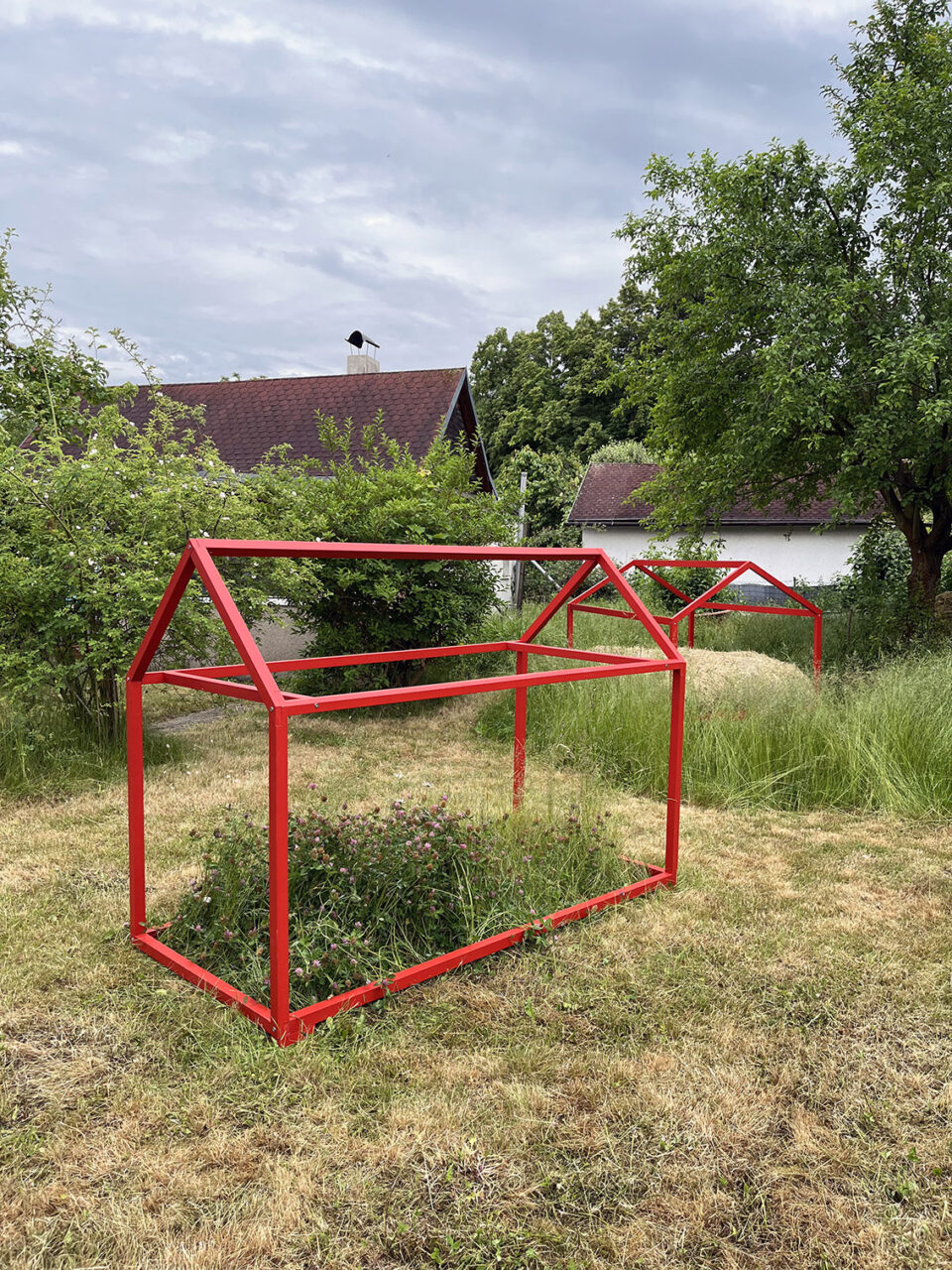
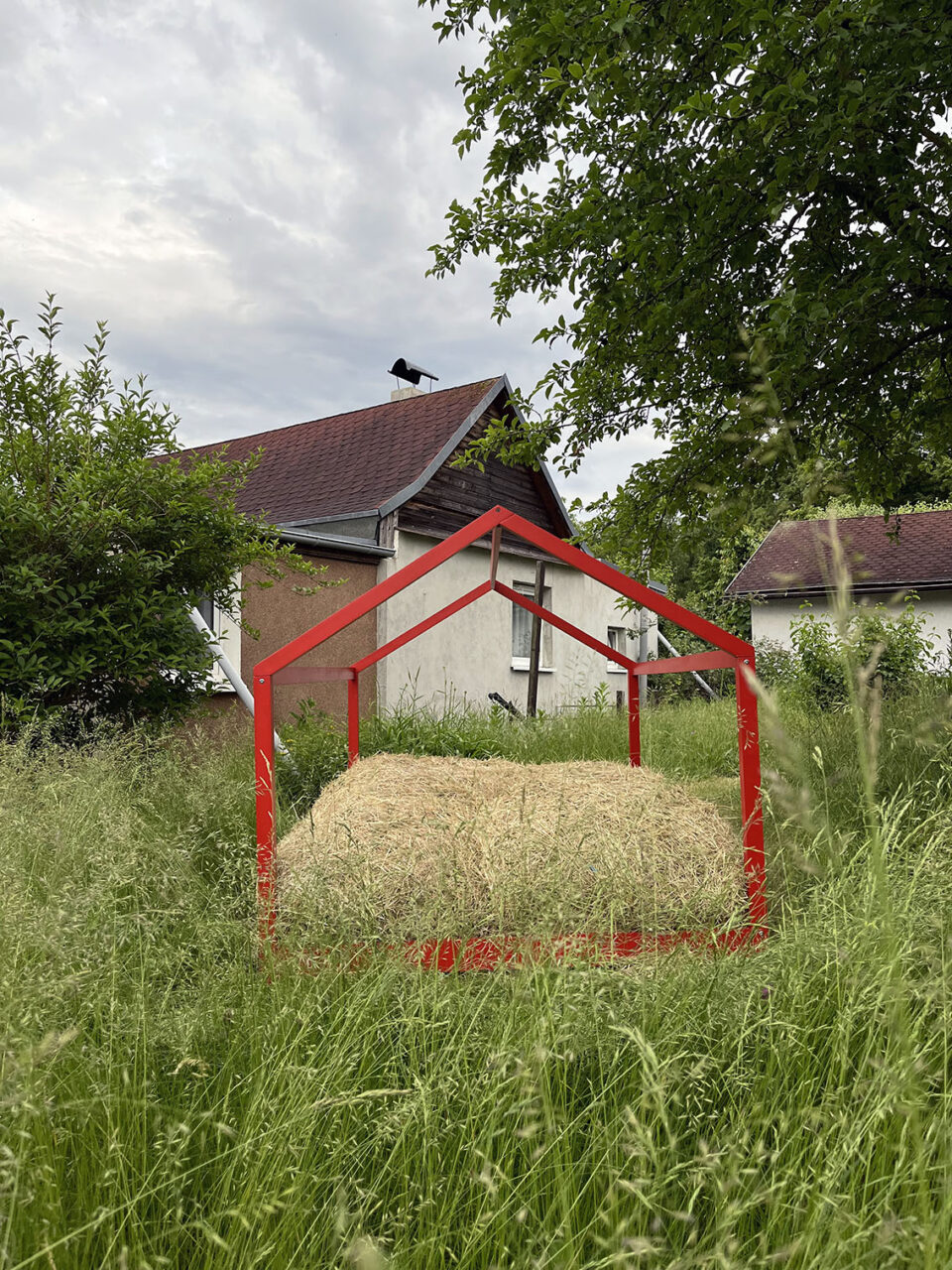
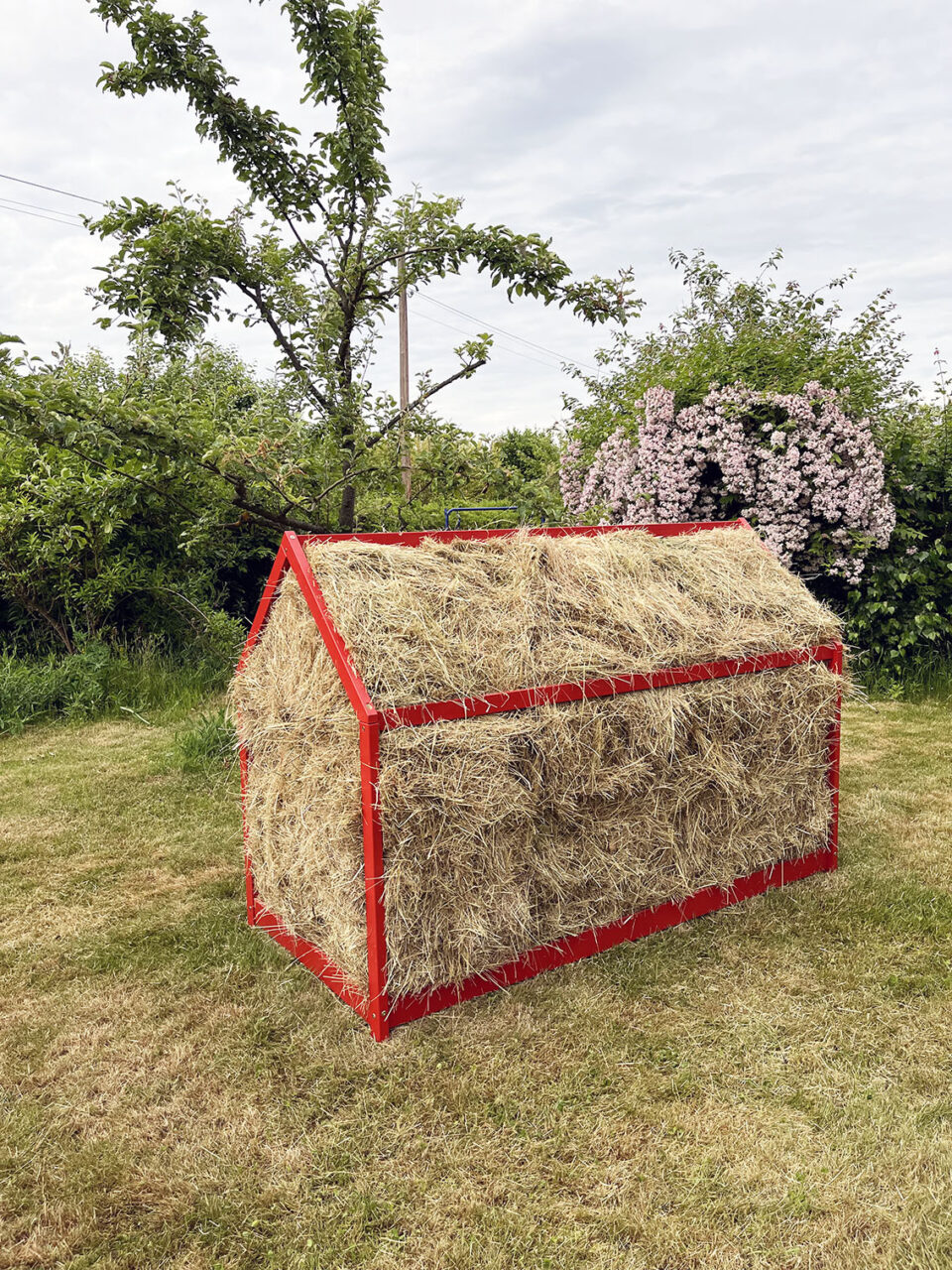
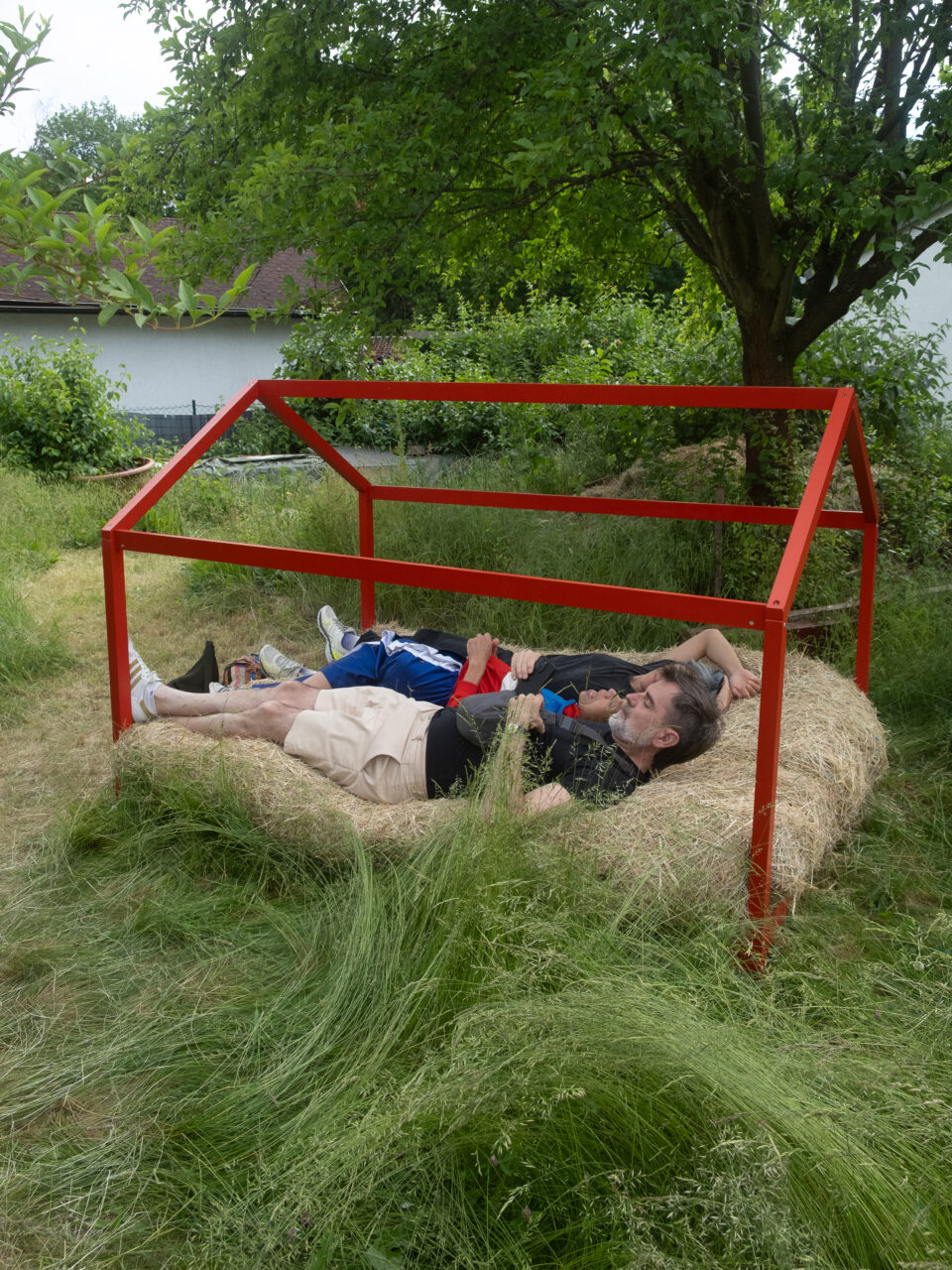
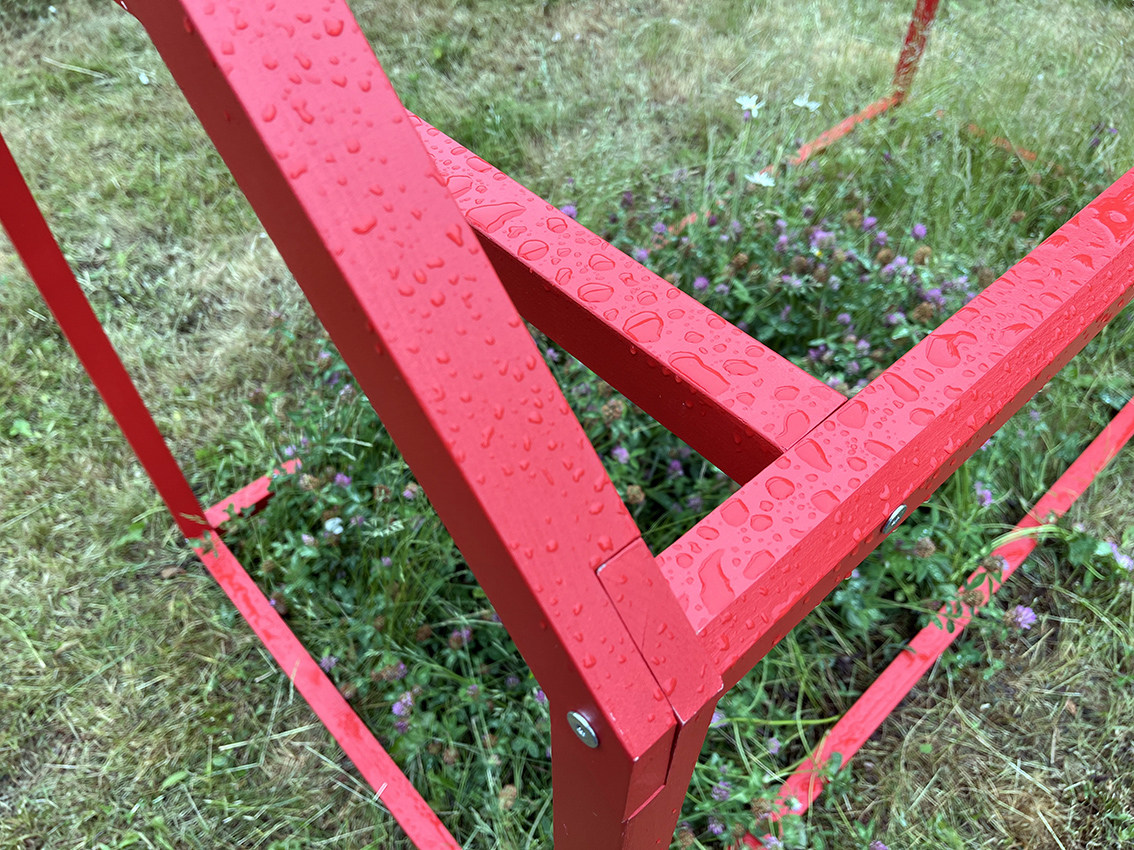
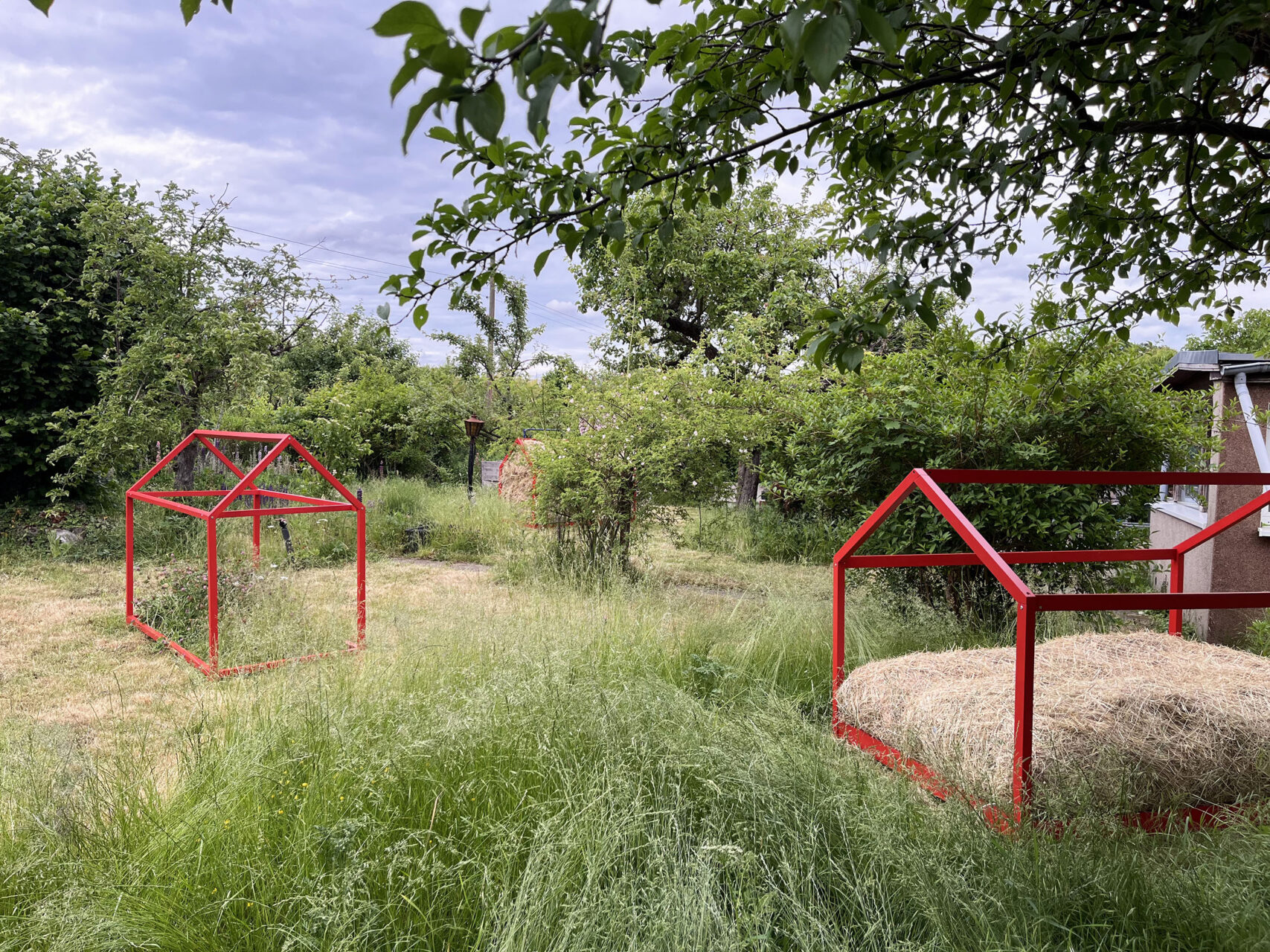
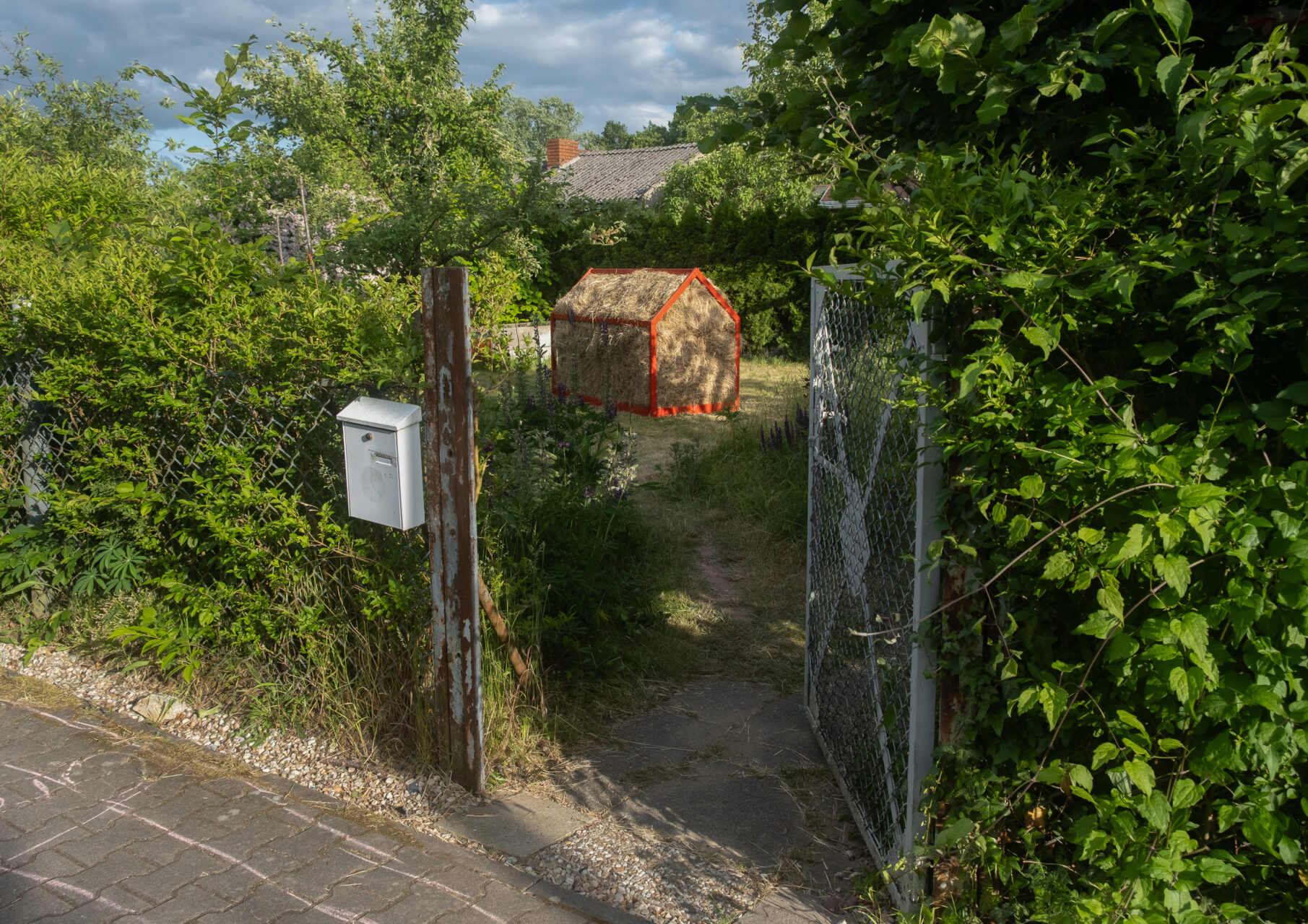
„.. [D]rei Betten markieren unterschiedliche Zustände innerhalb eines gemeinsamen Kreislaufs: einen geschützten Raum des Wachstums und der Betrachtung, in den der Mensch nicht eingreift; einen Raum der Transformation und der Arbeit, in dem organisches Material wie Grasschnitt gesammelt und getrocknet wird; sowie einen Raum der Regeneration und des Innehaltens, der mit einer Heumatratze ausgestattet ist und Besucher zum Liegen und Verweilen einlädt.
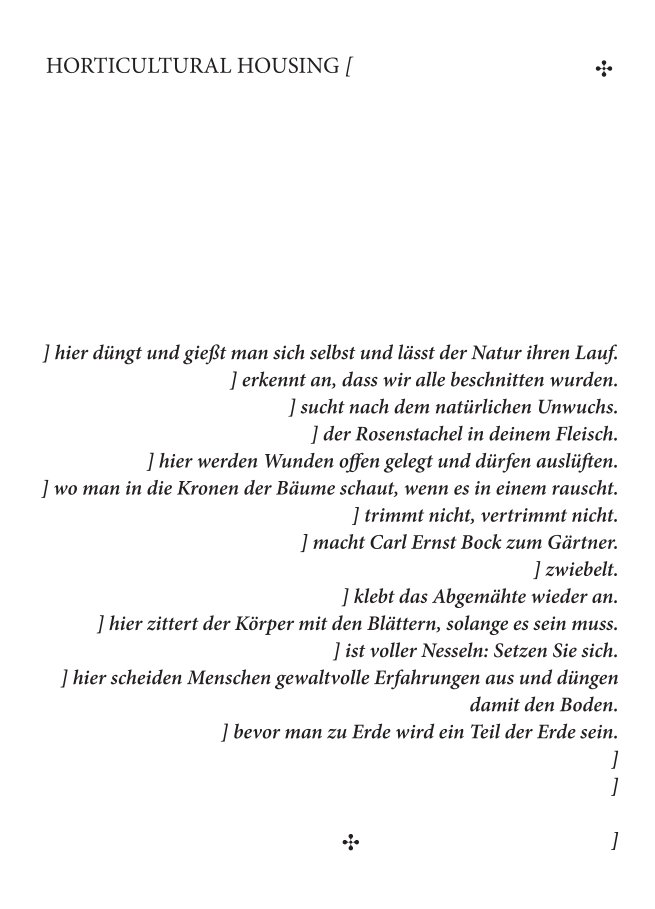
Die Arbeit überführt natürliche Zyklen in eine körperlich erfahrbare Anordnung und verbindet diese mit Fragen nach Arbeit, Erholung, Koexistenz und Schutz.
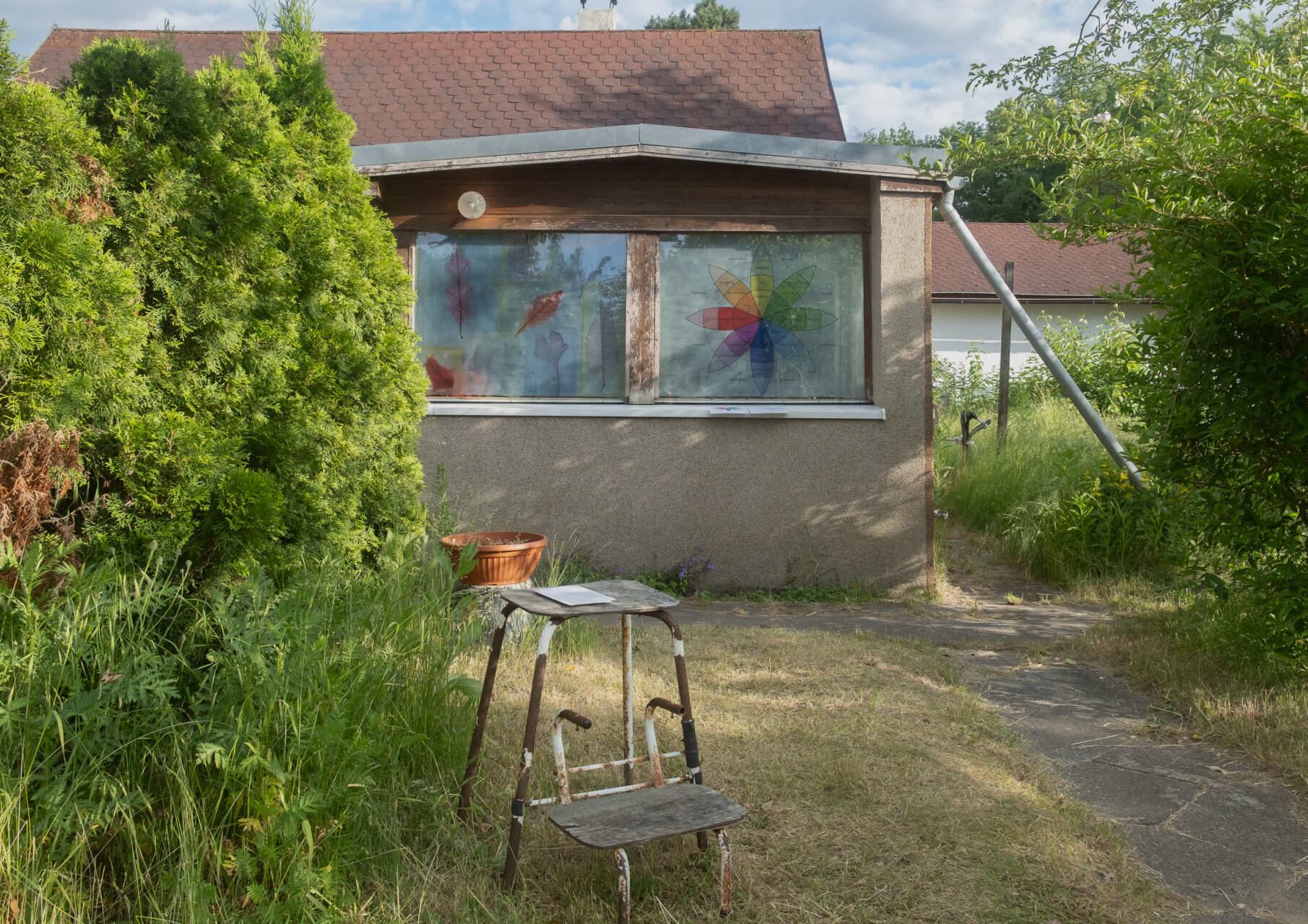
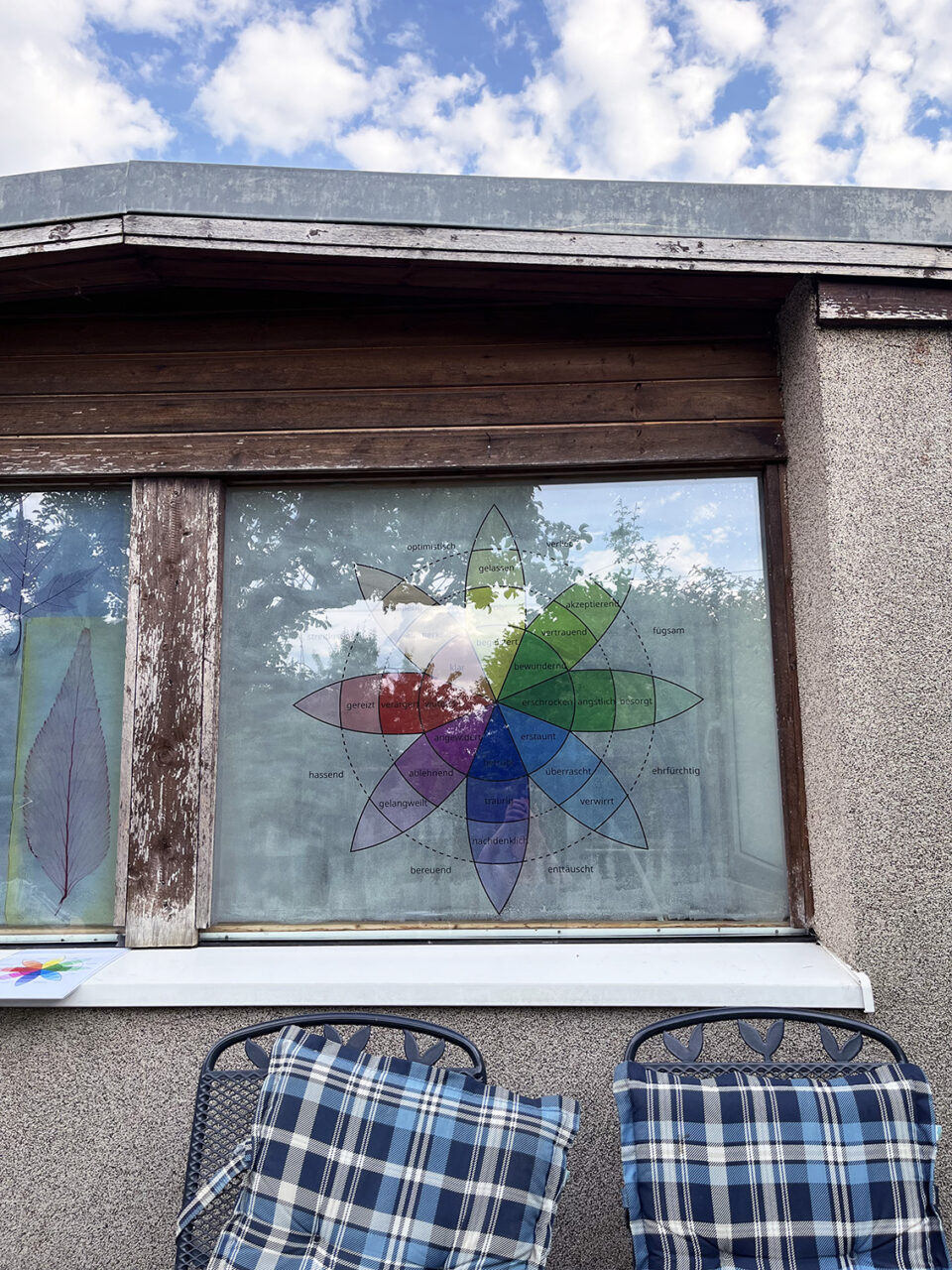
Weitere Elemente der Arbeit finden sich als bedruckte Folien auf den Fenstern des bestehenden Gartenhauses. Diese zeigen Referenzen aus dem Forschungsprozess der Künstlerin: Präparate der Nervensysteme von Laubblättern sowie das von Robert Plutchik entwickelte „Rad der Emotionen“, das emotionale Zustände in zyklischen Zusammenhängen darstellt.
Im Zusammenspiel entsteht eine räumliche Setzung, die den Kleingarten gleichermaßen als Ort produktiver Arbeit wie auch als Ort der Regeneration lesbar macht.
Die Arbeit fragt danach, wie sich Zyklen der Natur in menschliche Lebens- und Arbeitsweisen übersetzen lassen und inwiefern Zeiten des Stillstands, der Erholung und des Nicht-Produktiven als notwendiger Teil eines gemeinsamen Systems verstanden werden können.“
Text: Melanie Roumiguiere, Britzenale 6
Horticultural Housing, 2026 / House beds, hay, printed foil, text
„For the Britzenale, Julia Kiehlmann has developed the site-specific work Horticultural Housing, which explores cycles of growth, labour and regeneration and translates them into rhythms of human life and work.
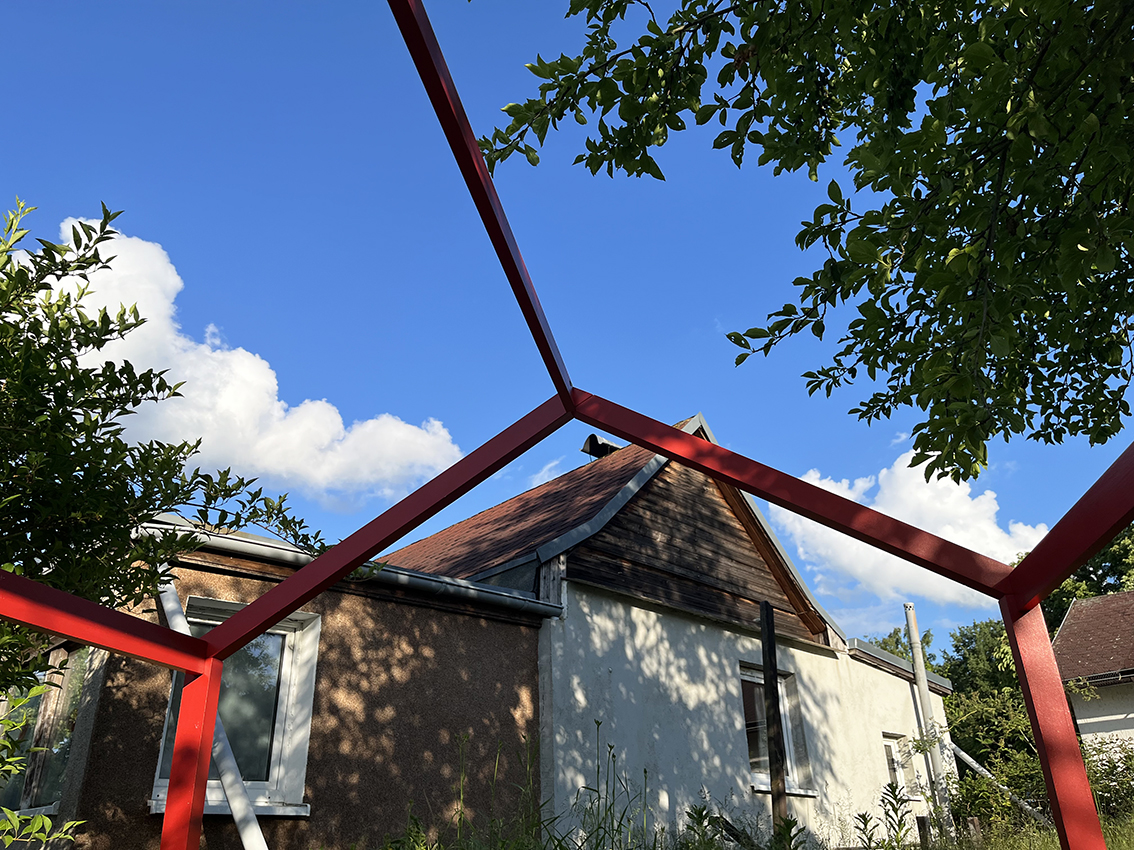
The installation is centred around three prefabricated Montessori house beds in different sizes (90 × 200 cm and 140 × 200 cm), painted in a vivid fire-red colour and placed throughout the allotment plot as spatial reference points.
The three beds represent different stages within a shared cycle: a protected space for growth and contemplation untouched by human intervention; a space of transformation and labour where organic material such as cut grass is collected and dried; and a space of regeneration and pause, equipped with a hay mattress that invites visitors to lie down and linger.
The work transforms natural cycles into a physically experienceable arrangement, linking them to questions of labour, rest, coexistence and protection.
Additional elements appear as printed films applied to the windows of the existing garden house. These feature references from the artist’s research process, including images of the vascular systems of broad-leaved plants and Robert Plutchik’s “Wheel of Emotions,” which visualises emotional states as cyclical processes.
Together, these elements create a spatial constellation that presents the allotment garden both as a site of productive work and as a place of regeneration.
The work asks how natural cycles can be translated into human ways of living and working, and to what extent periods of stillness, rest and non-productivity can be understood as necessary components of a shared system.“
Text: Melanie Roumiguiere, Britzenale 6
 Piotr Pietrus, 2026
  Piotr Pietrus, 2026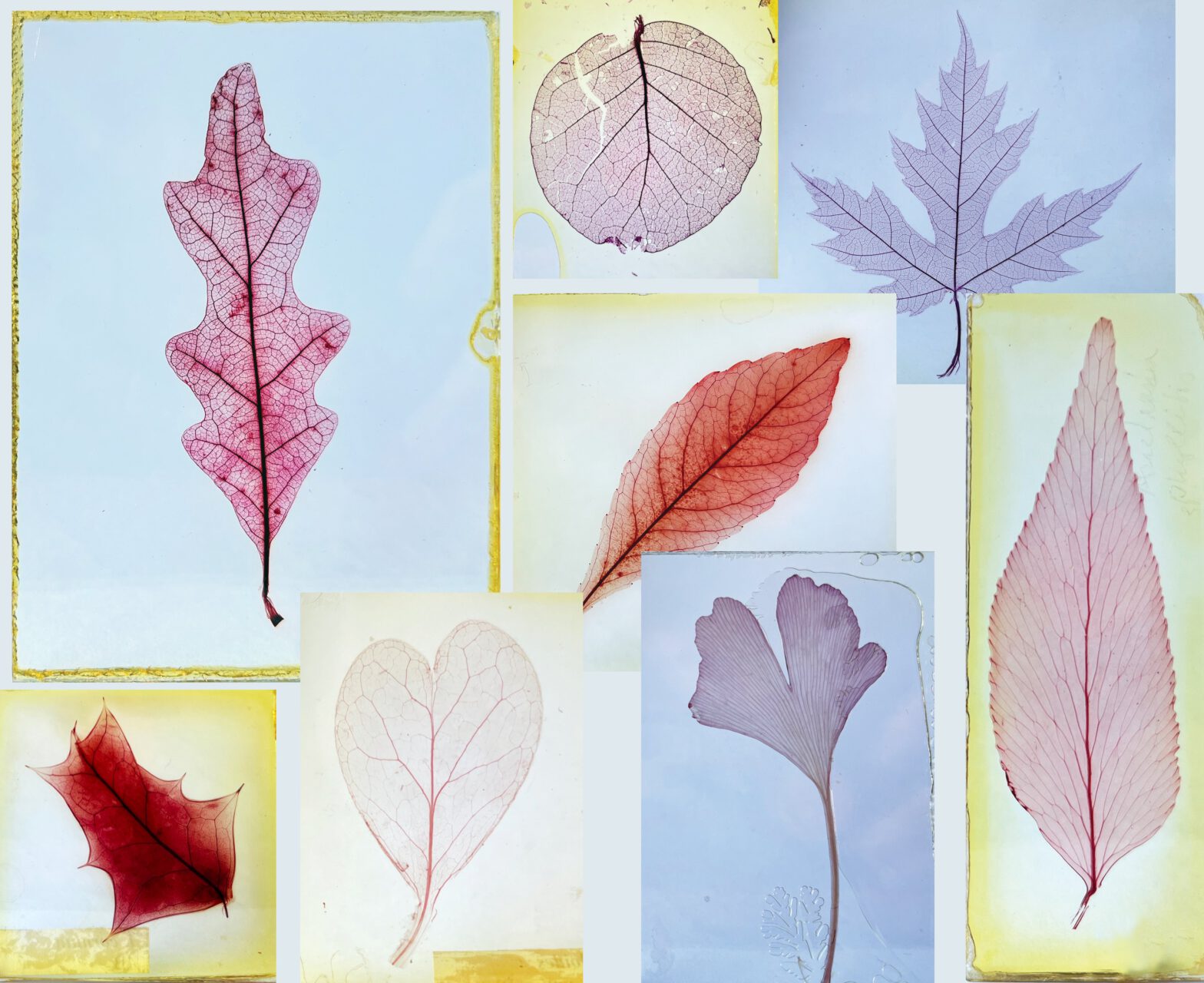
 Piotr Pietrus, 2026